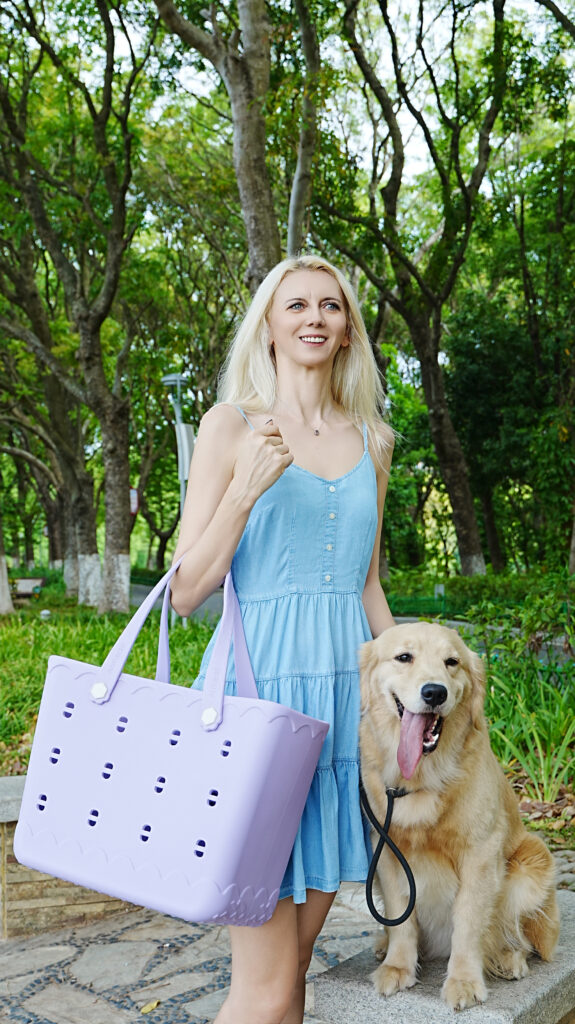
Introduction to durable beach bag materials
Beach bags face unique challenges. Sand will seep into every corner, seawater will corrode zippers, and ultraviolet rays will cause bags to fade over time. The wrong material may cause the bag to sag, discolor or even tear after a few uses. Choosing the right material can ensure that your bag remains functional, fashionable and reliable in every season.
Key factors influencing material selection
Water resistance:
Beach bags often get damp due to liquids, rain or splashes. Materials such as nylon and polyester have excellent water resistance, while natural fibers such as cotton have water absorption properties. If you plan to subimmerse the bag in water (for example, during water sports), look for waterproof materials such as neoprene or treated EVA.
1.Uv protection
Prolonged exposure to sunlight can lead to fading and material damage. Uv-resistant materials, such as polyester fibers or coated materials, can maintain color and strength for a longer time. Dark materials are also more resistant to fading than light materials.
Sand resistance:
Sand can stick to the fabric and is very troublesome to clean. Smooth and poreless fabrics, such as EVA or coated canvas, can easily shake off sand, while woven fabrics will absorb sand. Mesh bags can help expel sand, but they may not be able to prevent sand from entering the main compartment.
Weight and portability:
When filled with things, the heavy bag will become cumbersome. Lightweight materials such as nylon or neoprene can reduce pressure, but durability should also be taken into account – fragile materials may tear under load.
2.Ease of cleaning
Salt stains, sand stains and sunscreen stains are easy to remove. Machine washable fabrics such as polyester save time, while materials that need to be hand-washed (such as untreated canvas) require more effort.
3. Top-quality materials for durable beach bags
Canvas
Canvas is a classic choice, renowned for its sturdiness and durability. It is made of cotton or cotton-polyester blended fabric, tear-resistant and durable. However, untreated canvas will absorb water, become heavy and prone to mold. Waterproof treatment can alleviate this situation, but it will increase the maintenance steps. For those casual beach enthusiasts who care about appearance and don’t mind occasional maintenance, canvas is the ideal choice.
Nylon
Nylon is the first choice for being lightweight and durable. It dries quickly, is waterproof and can withstand rough handling. Tear-resistant nylon is reinforced with a grid pattern, which can prevent the spread of fine tears. Its main drawback is that ultraviolet radiation will weaken the fibers over time, so prolonged exposure to direct sunlight should be avoided. Nylon is suitable for active people who need backpacks for beach trips and hiking.
Polyester fiber
Polyester fiber combines durability and anti-fading properties. It is easy to clean, dries quickly and is not prone to deformation. Although it is not as breathable as natural fibers, it is still a practical choice for those who want a bag that is easy to maintain. Polyester fiber is suitable for families or people who travel frequently. They need a bag that can maintain its new appearance even after multiple uses.
Chloroprene rubber
Neoprene was originally used in diving suits and has the properties of flexibility, water resistance and shock absorption. It can protect fragile items such as electronic products and prevent sand from adhering. However, chloroprene rubber is relatively expensive and prone to heat accumulation, making it inconvenient to carry in hot weather. Neoprene is perfect for water sports enthusiasts or anyone who needs a bag that also serves as a protective cover.
Recycled/environmentally friendly materials
Consumers who focus on sustainable development may choose recycled plastic, jute or organic cotton. Recycled materials can reduce landfill waste, but their durability varies depending on the processing method. For example, jute is biodegradable, but its water resistance is not as good as that of synthetic fibers. Please strike a balance between environmental friendliness and performance based on your priorities.
4. Comparison of material properties
The following is a brief overview of how these materials are stacked:
The advantages and disadvantages of the material are the most suitable
Canvas is durable and has a classic appearance. When it gets damp, it becomes heavy and needs to be used for casual purposes by users who care about style
Nylon is lightweight, quick-drying, affordable, UV-sensitive and prone to pilling. It promotes an active lifestyle and outdoor travel
Polyester fiber does not fade, is easy to clean, has a low cost, but poor breathability and is prone to generating static electricity. It is suitable for people and families who travel frequently
Neoprene rubber is waterproof, flexible and protective, but expensive and has poor heat preservation. It is suitable for water sports and fragile items
Recyclable, environmentally friendly, unique texture, uneven durability, limited styles, sustainable development advocates
Scenario-based suggestions:
Water sports: Neoprene or treated nylon.
Family outings: Polyester or tear-resistant nylon.
Leisure use: Canvas or jute.
Eco-friendly options: Recycled plastic or organic cotton.
5. Additional functions to enhance durability
Choosing the right materials is just the beginning. To maximize the service life, please pay attention to the following features:
Reinforced stitching: Double stitching can prevent wear and tear.
Anti-rust hardware: Zippers and buckles made of corrosion-resistant metals such as stainless steel have a longer service life in salt-containing environments.
Padded handle: The ergonomic design reduces hand pressure, especially when handling heavy objects.
Mesh panel: The ventilated pockets allow sand and water to be drained out, keeping the contents dry.
6. Maintenance tips for extending service life
Proper maintenance can extend the service life of the bag:
Cleaning: Nylon/polyester fabrics can be hand-washed with mild soap. Polyester fabric can be machine washed in a gentle mode. Avoid wring out the wet canvas – re-shape and air dry.
Storage: Please keep in a cool and dry place, away from direct sunlight. Avoid folding neoprene rubber for a long time to prevent wrinkling.
Repair: Use sticky fabric patches to repair the small holes. Reinforce the loose seams with fabric glue or sewing thread.
7. User comments and real cases
Real users provide valuable insights:
I have been using my nylon beach bag for two years and go on trips every week. Although it has faded a little, it is still in perfect condition! — Sarah, a beach lover.
The polyester bags I bought for the children are truly saviour – they can be wiped clean in just a few seconds! — Mark, the father of three children.
I love my kayak neoprene handbag so much. It can keep my phone dry and shake off the sand! — Lisa, an outdoor sports enthusiast.
8. Conclusion and Final Recommendations
The best material for choosing a beach bag depends on how you use it. The canvas style is classic, but it requires meticulous care. Nylon and polyester are both durable and convenient. Chloroprene rubber performs well in a humid environment; And recycled materials are in line with the concept of environmental protection. Please give priority to your needs: Do you value portability, water resistance or sustainability more?